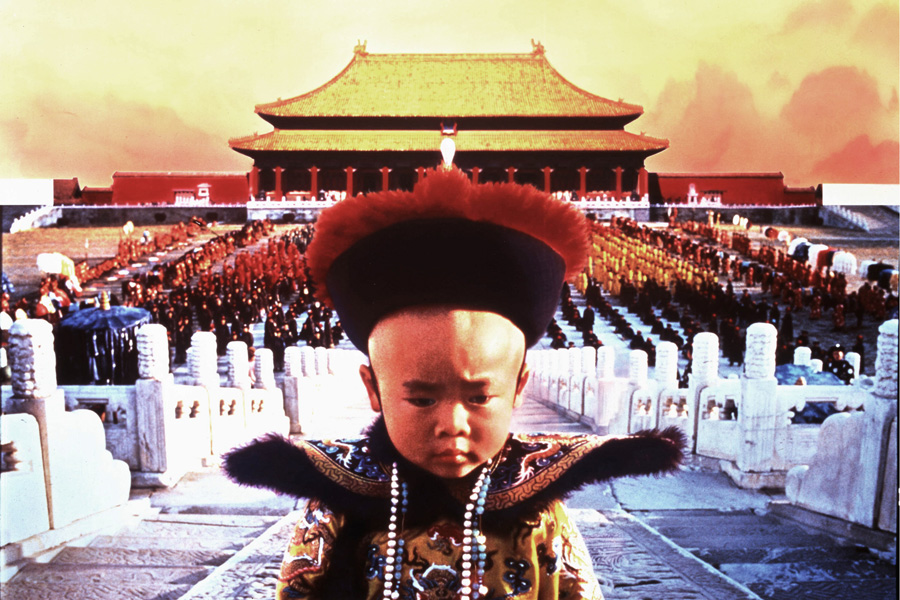
The Last Emperor
Overview
"The Last Emperor" is a significant entry in cinema history, a film directed by the renowned Italian director Bernardo Bertolucci. It is a biographical drama that chronicles the life of Aisin-gioro Pu Yi, the last emperor of the Qing Dynasty (1644-1911), and his journey through the tumultuous changes in modern Chinese history.
The film was a collaborative effort between Italy, China and the United Kingdom and marked a pivotal moment in the globalization of China's film industry, showcasing the potential of international co-productions. Released in 1987, the film received critical acclaim and commercial success, earning nine Academy Awards, including Best Picture and Best Director.
Plot Synopsis
The narrative of "The Last Emperor" starts with Pu Yi's early ascension to the throne as a child and follows his life through various significant historical events, including the fall of the Qing Dynasty, his time as a puppet ruler in the Japanese-occupied puppet state of Manchukuo, and his eventual imprisonment. The film explores themes of identity, change, and the loss of power, providing a poignant portrayal of a man caught in the tides of history.
Production and Filming
One of the most remarkable aspects of "The Last Emperor" is its production. It was the first feature film authorized by the Chinese authorities to be filmed in the Forbidden City in Beijing. This unprecedented access allowed Bertolucci to capture the grandeur and historical authenticity of the locations, adding significant depth and realism to the narrative.
The film's production was a massive undertaking, involving international collaboration in terms of both financing and talent. The cast included John Lone as Pu Yi, Joan Chen as Empress Wanrong, and Peter O'Toole as Reginald Johnston, Pu Yi's tutor. The film was shot in various locations in China, Italy and the United Kingdom, with a dedicated team working to ensure historical accuracy in costumes and set design.
Cultural and Historical Impact
"The Last Emperor" is notable not just for its artistic achievements but also for its impact on the perception of Chinese history and culture internationally. By focusing on the life of Pu Yi, the film provided a human perspective on the dramatic transformations that China underwent during the early 20th century. It highlighted the personal struggles of Pu Yi amidst political upheaval, offering audiences a nuanced understanding of this period in Chinese history.
Additionally, the film played a crucial role in the global cinema landscape by illustrating the power and potential of co-productions. It paved the way for future collaborations between China and other film industries, thereby contributing to the globalization of Chinese cinema. This trend has continued, with co-productions becoming an integral part of China's strategy to integrate its film industry into the global market.
Awards and Recognition
"The Last Emperor" was a spectacular success at the 1988 Academy Awards, winning all nine of the Oscars for which it was nominated. These included major categories such as Best Picture, Best Director, Best Adapted Screenplay and Best Art Direction. The film's sweeping success was a testament to its artistic quality and the effectiveness of its international collaboration.
The film also received numerous other accolades, including BAFTA Awards, Golden Globe Awards, and recognition at the Cannes Film Festival. Its success helped to elevate the status of both Bernardo Bertolucci as a filmmaker and the involved actors and crew, reinforcing the potential for cultural exchange through cinema.
Legacy
"The Last Emperor" remains a landmark film, not only as a cinematic masterpiece but also as a cultural bridge. It continues to be studied and appreciated for its historical narrative, artistic achievements, and its role in promoting international collaboration in the film industry. Its legacy endures as a testament to the power of cinema to tell compelling stories that transcend cultural and national boundaries, influencing audiences and filmmakers alike. Article reference1. Big picture in globalisation. chinadaily.com.cn. 20182. Museum of the Imperial Palace of 'Manchukuo'. chinaservicesinfo.com. 20193. Superstar actress Chen looks back on early years. chinadaily.com.cn. 2019Photo Gallery(3 pictures)CategoriesArtsTagFilm and TVRelatedChen ChongTian'anmen Square ComplexForbidden CityPu Xinyu (Puru)Catalogue1. Overview2. Plot Synopsis3. Production and Filming4. Cultural and Historical Impact5. Awards and Recognition6. Legacy- - - []








